


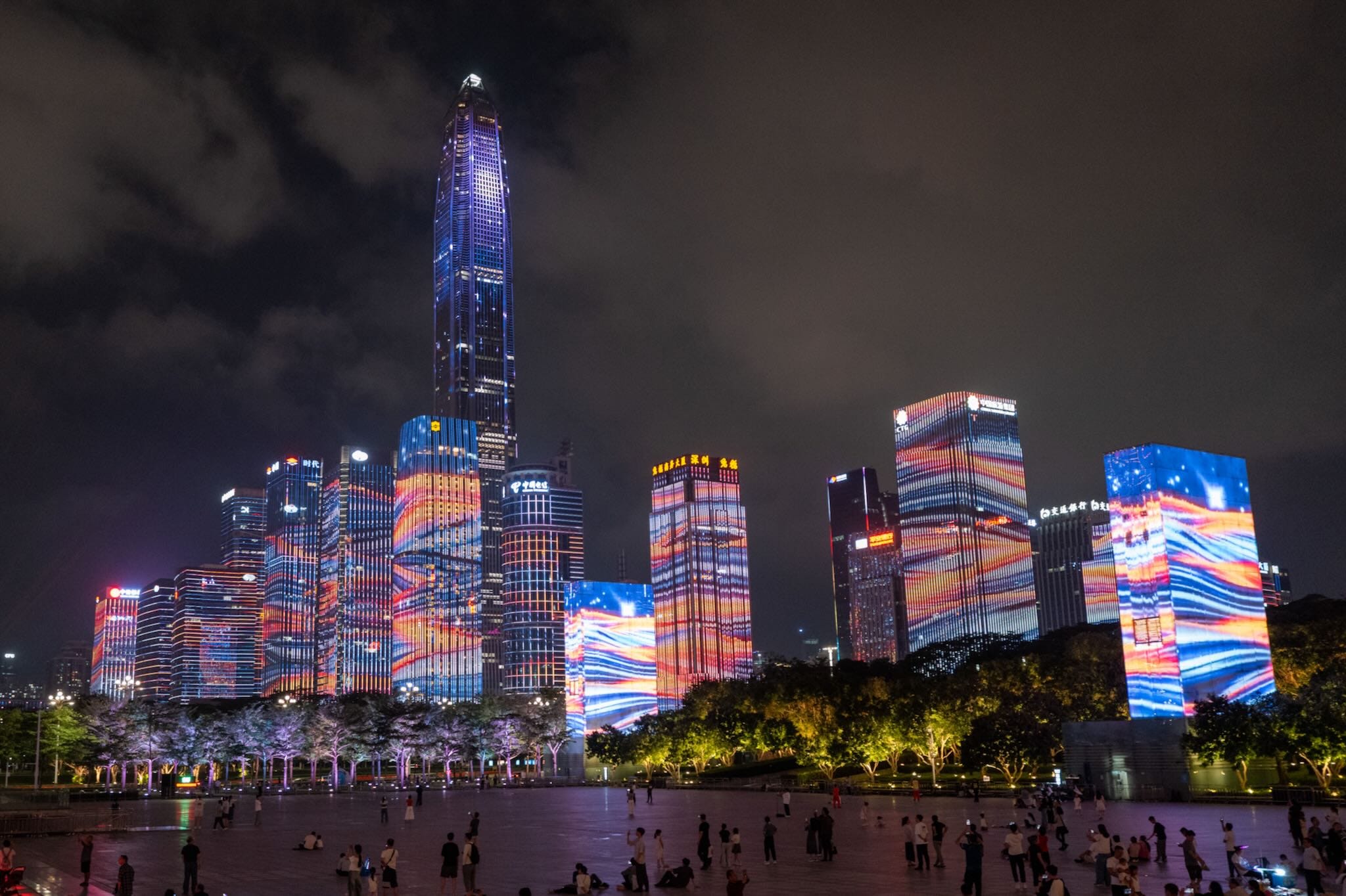
I recently spent some time traveling in China. I was particularly keen to understand the state of Chinese high-end technology. Trade shows like the Canton Fair are full of robots you can buy. But which of them have actually escaped the showroom and entered daily use?
I went to Shenzhen, the Silicon Valley of electronics. There, I saw several robots that we have grown accustomed to in the West in recent years, but I was also surprised by several that you don’t usually see there.
What stood out was that the successful robots were not necessarily the most advanced-looking ones. They were the ones embedded into the surrounding infrastructure: elevators, payments, hotel systems, transport networks, and cars. At the same time, I kept wondering whether this might become the deciding factor in the robot race between the West and the East.
Hotel delivery robots
Delivery robots are very common in China and have become a well-developed industry of their own. If you are staying at a good hotel, you will likely see them. They are usually docked at reception. If you order food, instead of the delivery driver or hotel staff searching for your room, they place the order inside the robot, and the robot brings it to your door. Fast and efficient.


The interesting part is that, for this to work, the robots need to be integrated with elevators and hotel room doorbell systems. This allows them to move around the building and get your attention when they arrive.
This highlights one of the main challenges of deploying robots in real-world environments. The bottleneck is often not the robot itself, but its integration with everything around it. I can imagine the friction involved in trying to deploy such a product in a legacy hotel in the West. In the places I visited in China, this seemed to be much less of a problem.
Robot receptionist
Another kind of robot you can see is the robot receptionist. You can find them in various places, including event venues and train stations. Usually, they are simple screen-on-a-Roomba-style robots. More recently, though, you can also see more advanced humanoids with robot arms and grippers.


Seeing one such robot next to a human receptionist, I asked whether she was afraid of losing her job. She didn’t seem nearly as concerned as many people in the West now seem to be about AI. Instead, she explained that she can’t be at the desk all the time because of her other duties, and the robot can help when she is not there.
If you are lucky, you can also run into more experimental applications, such as a robot sales assistant selling beverages at the Canton Fair. You order and pay at the touch screen, and the robot hands you the item.
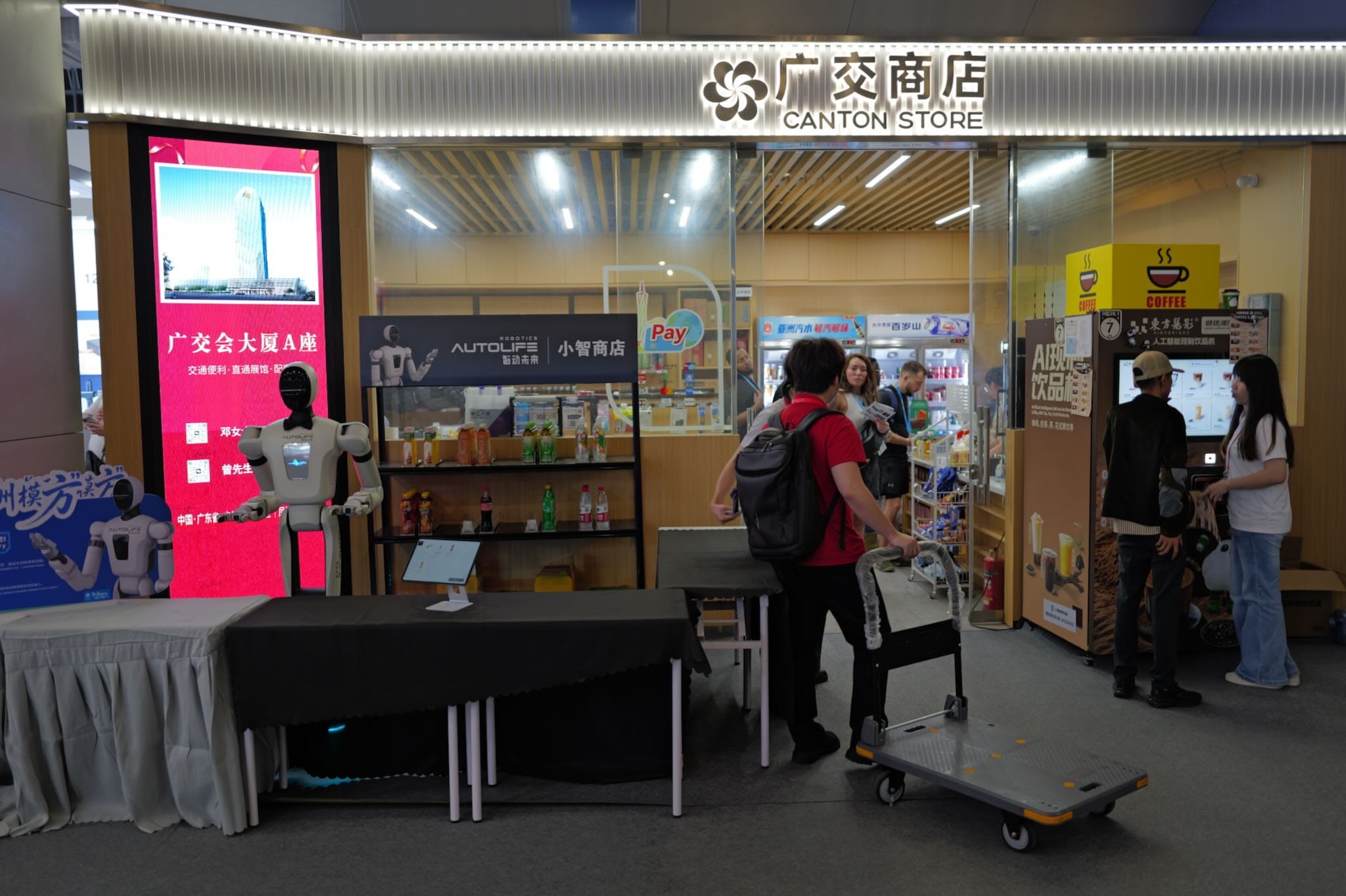
Unlike the hotel delivery robots, the receptionist robots felt more like optional front-desk augmentation than core infrastructure. I saw them several times, but I did not see many people actually using them. That made them feel closer to experimentation or branding than a clear productivity win.
Robot baristas
These are reasonably new and, for some reason, very popular. Puzzlingly enough, they also attracted the largest gatherings of Westerners at the Canton Fair.
In essence, they are a combination of one or two robotic arms operating a classic coffee machine. You can see them installed in high-end hotels or as vending machines in public places.


Robot baristas seem puzzling at first. A robotic arm operating a normal coffee machine is not obviously more efficient than a dedicated vending machine. But that may be the point. It is not only selling coffee; it is selling the experience of being served. In places where convenience and spectacle matter more than the ritual of a human-run café, this makes sense.
In London, you can find an abundance of coffee shops serving top-quality artisan coffee. From a unit-cost perspective, these are extremely inefficient. Sometimes you need to wait in line just to get served. Still, people go there for a kind of experience that a stand-alone coffee machine can never deliver.
I didn’t see many high-end coffee shops in China. Robot baristas seem to fill this niche: delivering the premium experience of being served without the need for inefficient human labour.
Self-driving taxis
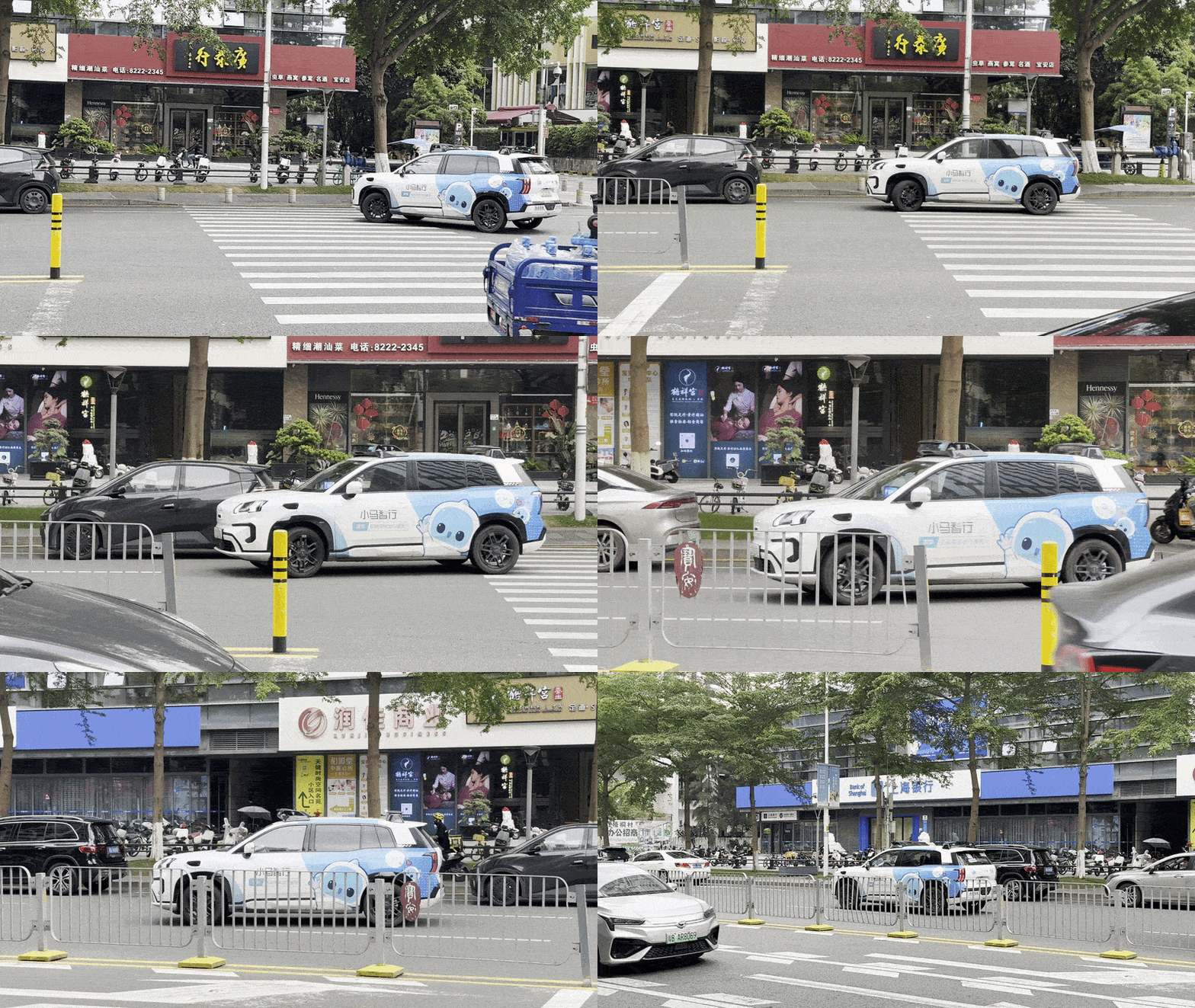
If hotel robots show what happens when buildings are designed for automation, robotaxis show the same question at city scale. China also has fully self-driving robotaxis. You can see them in Shenzhen and a few other cities. You summon them using an app, and the experience is very similar to taking a Waymo.
They are not as abundant as they are in San Francisco, though. On the other hand, there seem to be more providers. Unlike Waymo, they don’t use a large spinning LiDAR on the roof. Instead, they use a more compact solid-state LiDAR and camera roof configuration.
New ADAS cars
But the more important form of autonomy may not be the robotaxi. It may be the ordinary car.
Any large shopping mall usually has a number of Chinese auto brands showcasing their latest vehicles, often EVs. These brands include Huawei, XPeng, NIO, Li Auto, and a few others. It is quite surreal to see cars and mobile phones from the same brand being sold next to each other. The cars are usually priced at around half the price of Western equivalents. They feature luxury interiors, rich infotainment systems, and screens everywhere.
You can also buy Teslas, and they are still popular. Compared to modern Chinese cars, they feel more sparse and minimalist. Interestingly, in China, you can buy Tesla models not yet available in the West, such as the six-seater Tesla Model YL.


What you notice is that all new Chinese vehicles feature a Tesla-like sensor configuration, with ADAS cameras behind the mirror and on the fenders. They are also equipped with powerful AI-accelerated computers.
The performance of the actual software is still limited to highway-style autopilot, such as lane keeping and lane changes, rather than the full Tesla city FSD experience. However, with the right sensors, connectivity, and compute, they now have all the necessary components to continuously collect data and improve their capabilities. This is how Tesla built its Autopilot, so I expect things will improve from here.
Judging the progress
All these robots are interesting, but the successful ones are not yet quadrupeds or general-purpose humanoids. They are narrow systems embedded into buildings, payments, logistics, and transport infrastructure. The robot is only one part of the product; the surrounding environment matters just as much including how open the society towards the robots is.
I think this shows both the opportunity and the challenge ahead. Perhaps the deciding factor in the robot race between the West and the East won’t be how advanced or expensive the robots are, but who builds the environments, workflows, and social habits that allow robots to become ordinary.